Flexibility and Longevity: Could Better Movement Help You Live Longer?
Oct 13, 2026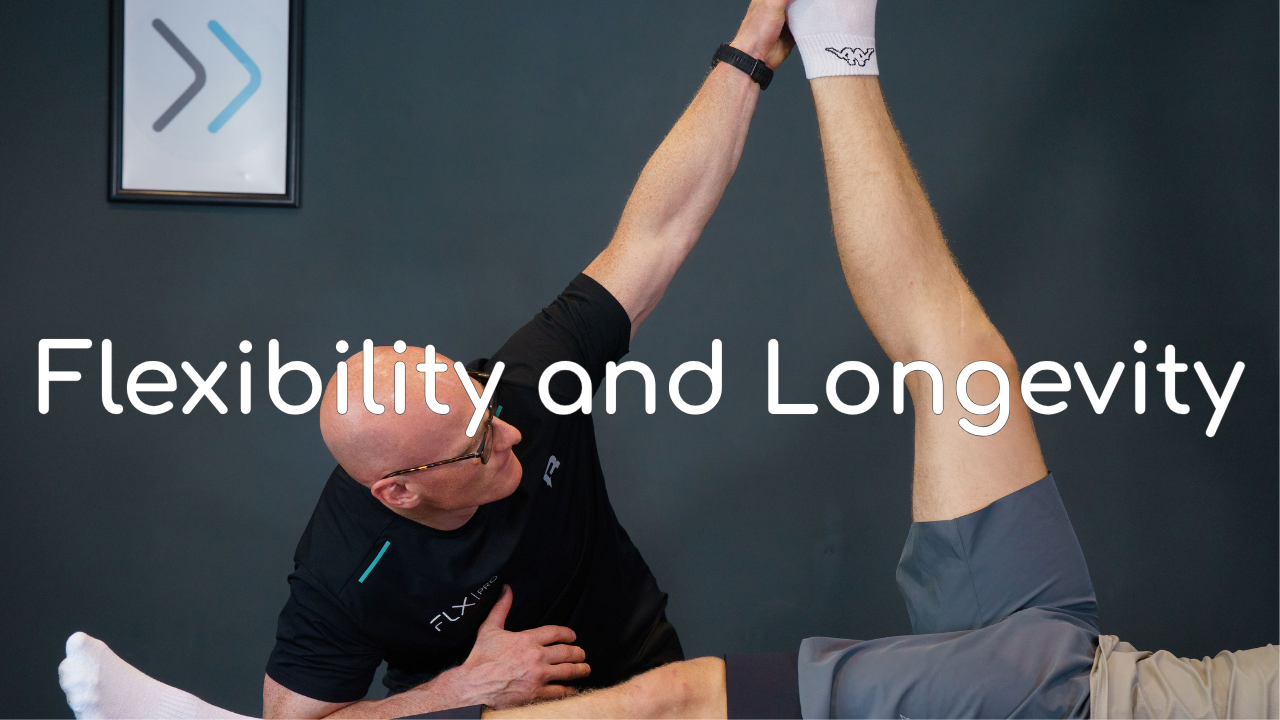
Could your ability to bend, reach and move freely reveal something about your long-term health?
A study published in 2024 in the Scandinavian Journal of Medicine & Science in Sports found that greater flexibility was associated with a lower risk of death in middle-aged adults. The findings give us another reason to pay attention to an often-overlooked part of fitness: how well our bodies move.
What Did the Study Find?
Researchers led by Dr Claudio Gil S. Araújo analysed data from 3,139 adults aged 46–65, following them for an average of 12.9 years.
They assessed flexibility using the Flexitest, which measures 20 movements across seven joints. These results produce a combined score called the Flexindex, ranging from 0 to 80.
People with lower flexibility scores had a higher risk of death from natural causes, excluding COVID-19. The association remained after researchers accounted for age, body mass index and health status.
Does This Mean Stretching Makes You Live Longer?
We cannot draw that conclusion yet.
This was an observational study: it tracked flexibility and survival rather than testing whether a stretching programme extended participants’ lives.
Flexibility could be a useful indicator of overall health, but the study does not establish why the relationship exists. The researchers specifically called for further studies to investigate whether improving flexibility through training leads to longer survival.
Why Flexibility Still Deserves Your Attention
You do not need a promise of extra years to make flexibility worth working on.
Regular stretching can improve joint range of motion, helping your body access the positions needed for everyday activities and exercise. That might mean reaching overhead, bending to put on your shoes or moving more freely during a workout.
Think about the movements you want to keep doing as you get older. Walking your favourite routes, playing golf, gardening or getting down on the floor with your grandchildren all give your training a practical purpose.
The goal is to develop enough flexibility—and the strength and control to use it—for the life you want to lead.
How to Start Improving Your Flexibility
A simple, consistent routine is a good place to begin:
-
Warm up first. Try a few minutes of gentle walking before stretching.
-
Move slowly into each stretch. Avoid bouncing or forcing the position.
-
Hold for around 30 seconds. Breathe normally and allow yourself to relax.
-
Feel tension rather than pain. Ease back if the stretch hurts.
-
Practise regularly. Aim to stretch at least two or three times a week.
Focus on the major muscle groups, including your calves, thighs, hips, back, chest and shoulders, adapting each position to your own ability.
Where Does Assisted Stretching Fit In?
Assisted stretching offers a guided way to work on flexibility. A practitioner helps position and support your body, adjusting the stretch to your range of movement and feedback.
At FLX, we combine static assisted stretching with post-isometric relaxation (PIR) in structured sessions tailored to different goals—from the Hip & Leg Reset to the Golf Swing Optimiser.
The aim is to help clients work on their flexibility through a clear, personalised approach.
Invest in How You Move
The research raises an interesting possibility: flexibility may tell us more about long-term health than we previously realised. Whether improving it can directly extend lifespan remains an open question.
For now, there is a practical reason to start: maintaining the movement you need to enjoy everyday life.
Want to help others improve their flexibility? Explore the FLX Practitioner PRO course and learn how to deliver five structured assisted stretch experiences.
Want to help others improve their flexibility? Explore the FLX Practitioner PRO course and learn how to deliver five structured assisted stretch experiences.
Stay connected with news and updates!
Join our mailing list to receive the latest news and updates from our team.
Don't worry, your information will not be shared.
We hate SPAM. We will never sell your information, for any reason.
